The 2025 adaptation of *Frankenstein* reimagines Mary Shelley’s iconic tale with a modern edge while preserving the haunting core of its original themes. The story begins in a near-future scientific landscape where advancements in biotechnology have blurred the line between medical breakthrough and ethical catastrophe. Dr. Victor Frankenstein, a brilliant but emotionally fractured genetic engineer, becomes consumed by the desire to push beyond the boundaries of life and death after losing a loved one. His grief fuels a dangerous obsession, and he begins work on a forbidden experiment meant to revive human tissue through synthetic biological enhancement.
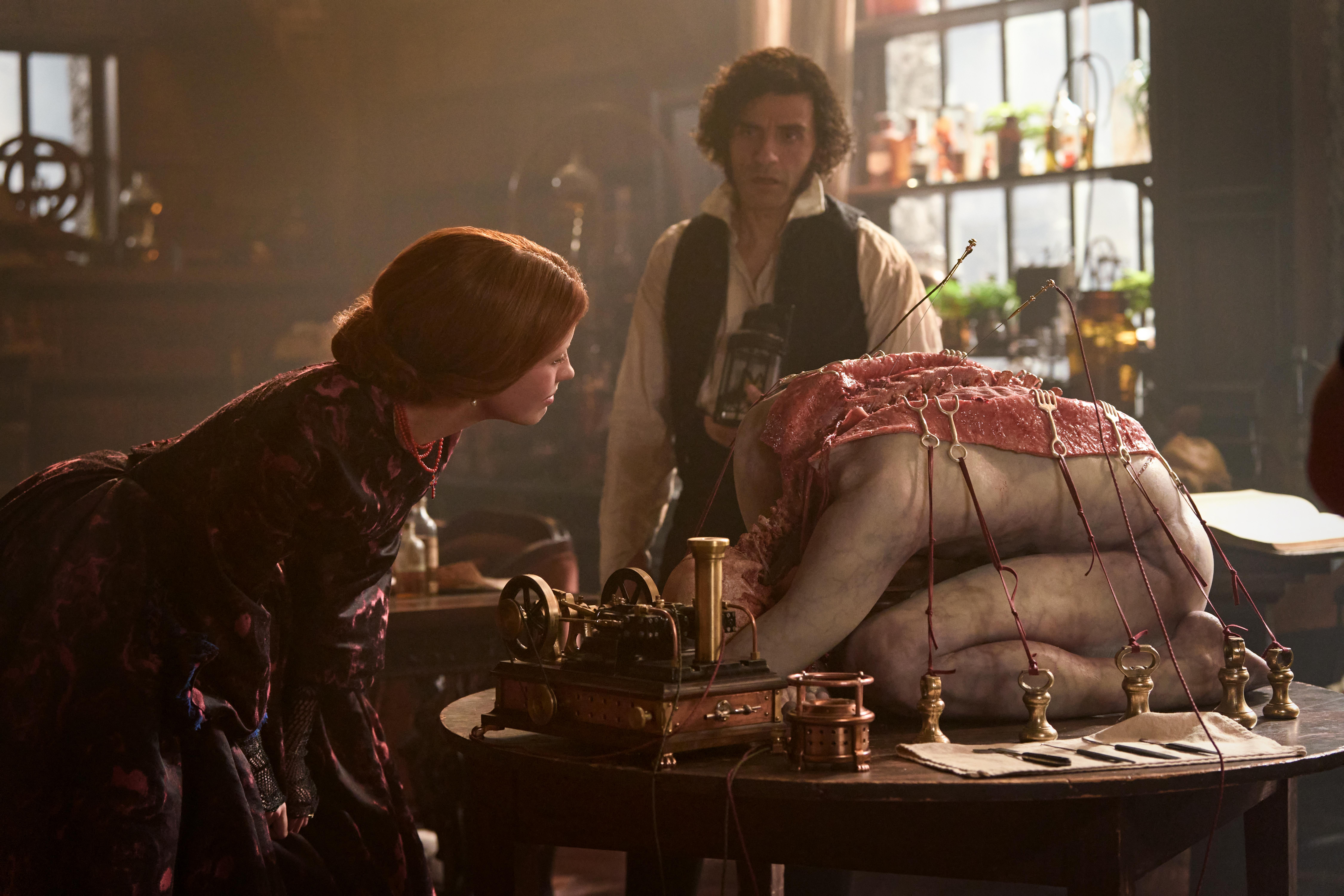
As Victor retreats deeper into isolation, the film slowly builds tension around his spiraling determination. His laboratory becomes a cold, sterile world where the hum of machines replaces human connection. The film explores his psychological descent with nuance, revealing both his brilliance and his inability to foresee the consequences. When his experiment finally succeeds, the moment is not triumphant but chilling, marked by flickering lights, broken machinery, and the unsteady rise of a being that should never have existed.
The Creature in this version is portrayed not as a mindless monster but as an intelligent, rapidly evolving entity whose confusion and pain are expressed through silence, movement, and haunting gestures. From its first moments of life, it hungers for understanding, compassion, and a sense of belonging. But Victor’s horror and immediate rejection drive the creature into the world alone. This emotional fracture becomes the central conflict of the film, portraying the creature not as evil but as shaped by abandonment and forces beyond its control.

As the creature learns to navigate the world, it becomes painfully aware of its difference. The film shows quiet scenes of it observing families, feeling the warmth of humanity from afar, yet unable to join. Meanwhile, Victor attempts to cover up his creation, fearing exposure and punishment. His guilt grows heavy, manifesting in nightmares and hallucinations as he watches news reports of strange sightings and unexplained violence.
The story escalates when the creature, desperate for connection and furious at Victor’s rejection, confronts him. Their meeting is charged with emotion—a conversation between creator and creation that exposes Victor’s hubris and the creature’s longing. Both characters are tragic reflections of one another: one ruined by ambition, the other by abandonment.
The climax unfolds in a dramatic, storm-ridden pursuit across a desolate landscape, mirroring the original novel’s icy tension. The ending is somber, emphasizing that neither creator nor creation ever truly escapes the consequences of their choices. The film closes on a stark reminder that humanity’s greatest danger may lie not in what we create, but in what we refuse to take responsibility for.
