“Movie Hellboy: Behind the Scenes” takes audiences beyond the fiery chaos and monstrous battles of the beloved dark fantasy series to reveal the artistry, challenges, and dedication that shaped the film’s creation. This behind-the-scenes journey delves into how director Neil Marshall and his team revived the iconic antihero for a new generation, blending modern technology with practical effects that pay homage to the original comic book’s gritty tone. The film’s production offers an intimate look at the immense effort required to bring Hellboy’s world of demons, destiny, and destruction to life.
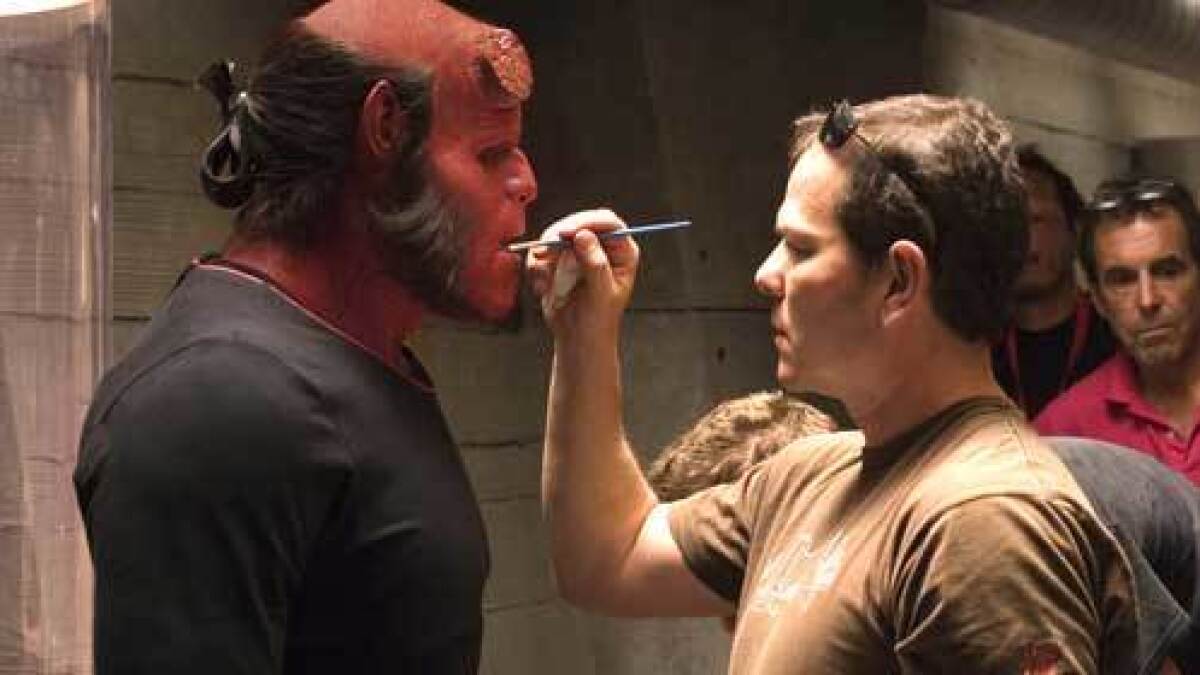
One of the most fascinating aspects of the behind-the-scenes story is the transformation of David Harbour into Hellboy. Every day, the actor underwent hours of intense makeup and prosthetic application, which included a full-body suit, massive horns, and a fiery red skin tone. The team of special effects artists worked tirelessly to ensure that the design looked both monstrous and expressive, allowing Harbour to convey emotion through layers of makeup. The process was grueling but ultimately rewarding, as it gave Hellboy a tangible, physical presence that CGI alone could never capture.
The visual effects department also played a major role in creating the movie’s demonic universe. From the fiery landscapes of Hell to the grotesque monsters Hellboy battles, each detail was carefully crafted using a mix of CGI, miniature sets, and motion capture. The combination of practical effects and digital technology gave the film its signature raw and realistic texture. Many sequences, especially the large-scale battle scenes, required complex choreography and pre-visualization, involving dozens of stunt performers and camera teams working in perfect coordination.

Filming locations across the United Kingdom added another layer of authenticity to the production. Ancient castles, misty forests, and eerie underground tunnels provided a gothic atmosphere that complemented the movie’s supernatural themes. The crew often faced harsh weather and long nights, but these challenges contributed to the film’s dark, immersive tone. Each location was chosen to reflect the contrast between Hellboy’s inner struggle and the apocalyptic world he must confront.
Behind the camera, the production design team focused on blending mythological symbolism with contemporary horror elements. Props like the Right Hand of Doom and the Excalibur sword were intricately built by hand, while costume designers drew inspiration from medieval armor and occult motifs. The attention to detail ensured that every frame felt steeped in mythology, reflecting the character’s tortured journey between good and evil.
In the end, “Hellboy: Behind the Scenes” reveals that the making of the film was as intense and passionate as the story itself. It was a project defined by artistic ambition, teamwork, and resilience in the face of creative challenges. Through this exploration, fans not only gain a deeper appreciation for the visual spectacle but also for the incredible human effort behind every fiery explosion, haunting creature, and emotional moment that defines the world of Hellboy.
